
West Covina Roofing Contractor
West Covina Fire Hazard Roofing: What to Check Before a New Roof
A hazard map can look like a verdict on your home, but it is not. Here is how we read it with you before you plan a new roof.
(626) 593-1910You want a plain answer about whether your West Covina address sits in a mapped fire hazard zone. That answer starts with your exact address and the City's own confirmation, not with a guess about your street.
We treat the map, the legend, and your roof plan as three separate questions. Below you get an ordered checklist, plus the reason behind each step.
The Map and Roof Question Checklist
Work through these steps in order, and write down every answer you cannot confirm yet.
- Open the City's Fire Department page and follow its link to the GIS Data Hub.
- Note your exact street address, and do not judge your property by your street or your block.
- Open the City-hosted State Fire Marshal map and check the date printed on it.
- Read the legend first, and note whether it shows unzoned Local Responsibility Area land, moderate, high, or very high.
- Write down what the map does not answer for your address.
- Ask the City whether that map is adopted for permit review at your address.
- Keep hazard and risk apart in your notes, because the map answers only the hazard question.
- List the whole proposed roof assembly, from the deck to the top surface.
- Ask the building official about that whole assembly, not about one product name.
- Save the map date, your notes, and the answers you got in one file.
Read the Map Date and Legend First
The City-hosted State Fire Marshal map carries a March 24, 2025 date, and a legend worth reading first.
That map marks Local Responsibility Area hazard zones, so start with the legend. The legend splits unzoned Local Responsibility Area land from moderate, high, and very high. Read the label that touches your address, not the color you expect.
A published map with a date does not by itself prove City adoption. It also does not prove any single address classification for your property.
- The date tells you which map version you are reading, and the legend tells you which zones it draws.
Hazard Is Not the Same as Risk
Hazard maps describe land and fire behavior, and they do not score your own property.
The Office of the State Fire Marshal builds hazard from physical conditions and expected fire behavior. It does not count the steps you already took, so the zone is not a grade for your house.
Risk is the property-level picture, and it asks what could happen where you live. Your roof, your vents, and your yard all sit inside that picture.
The State Fire Marshal says to confirm Local Responsibility Area questions with your local jurisdiction. West Covina sits in Los Angeles County, California, and here that jurisdiction means City staff.
What to Ask About the Proposed Roof
Ask the building official about the whole roof assembly, not about one product name.
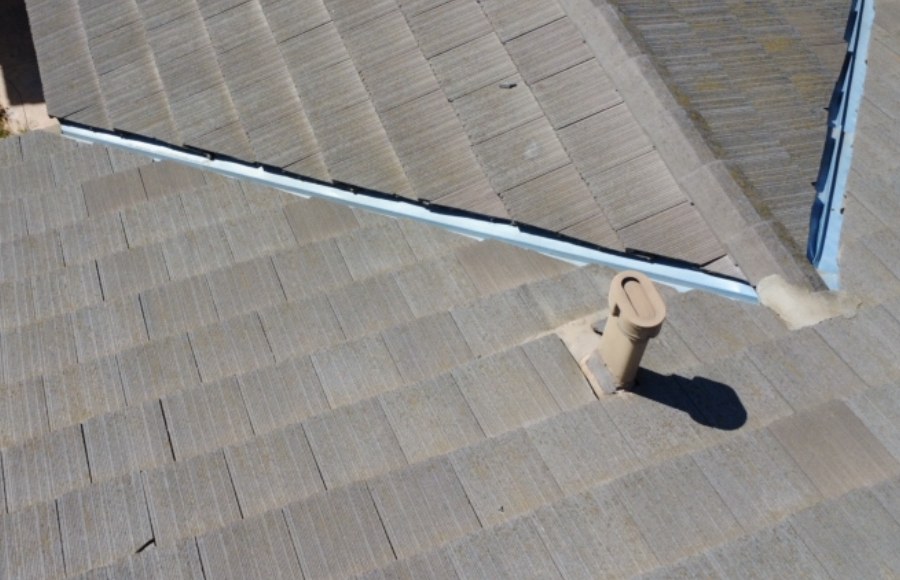
CAL FIRE's home hardening guidance covers roof materials, roof debris, and the gaps where embers get in. It also covers gutters and noncombustible drip edges, which are the metal trim along the lower roof edge.
The same guidance warns that vent changes can cut airflow, so it sends owners to the building official.
Underlayment is the water protection layer under your tile or shingles, and tile can outlast it. That is why a tile roof can get new underlayment instead of new tile.
- Is the City-hosted map adopted for permit review at my address?
- Which roof covering does the City accept for a project like mine?
- Does the deck or the underlayment need to change for this assembly?
- Will a vent change cut the attic airflow my roof needs?
- Which drip edge and vent details apply to my covering?
Where Class A Guidance Fits
CAL FIRE's Low-Cost Retrofit List recommends a Class A fire-rated replacement roof and noncombustible bird stops.
That list carries an April 2025 update, and it reads as best practice guidance. It does not prove a given assembly, and it is not a local permit approval.
Class A names a fire-resistance rating for a whole roof assembly, not for one product. Bird stops close the open gaps at tile ends, so ask the building official whether yours apply.
How We Help With Your Roof
We work the roof side of this question with you.
Tell us what the map showed and what the City told you, and we will start there. Then we can talk through your covering, your deck, and your vents. We offer a free estimate for roofing work.
We replace tile roofs and asphalt shingle roofs across West Covina. A full roof replacement and a single repair raise different questions about the same roof. Call (626) 593-1910, or reach us through our contact us page.
West Covina Roofing Contractor is a division of Home Vision Remodel.
Fire Hazard Map and Roofing Questions
What type of roof is most fire resistant?
CAL FIRE's retrofit guidance recommends a Class A fire-rated replacement roof, and Class A rates a whole assembly. Ask your building official which assembly fits your address, not which single product fits.
Does the City-hosted map prove my address is in a hazard zone?
No, it is dated State Fire Marshal mapping that the City hosts. By itself it does not prove City adoption, and it does not classify your address.