
Standing seam metal roofing
Metal Roofing in West Covina, CA
Standing seam panels in 24 gauge, installed and repaired across West Covina. Call (626) 593-1910 for a free estimate.
(626) 593-1910We install standing seam metal roofing in West Covina, and we repair metal roofs already on buildings here. The panels we install are 24 gauge, and the fasteners stay hidden under the seams. Call (626) 593-1910 for a free estimate on installation, repair or a full replacement.
Metal is only part of the answer on a roof that already has a covering. Decking, flashing and existing layers all shape the work, so those are the first things we ask about.
What a Standing Seam Metal Roof Is
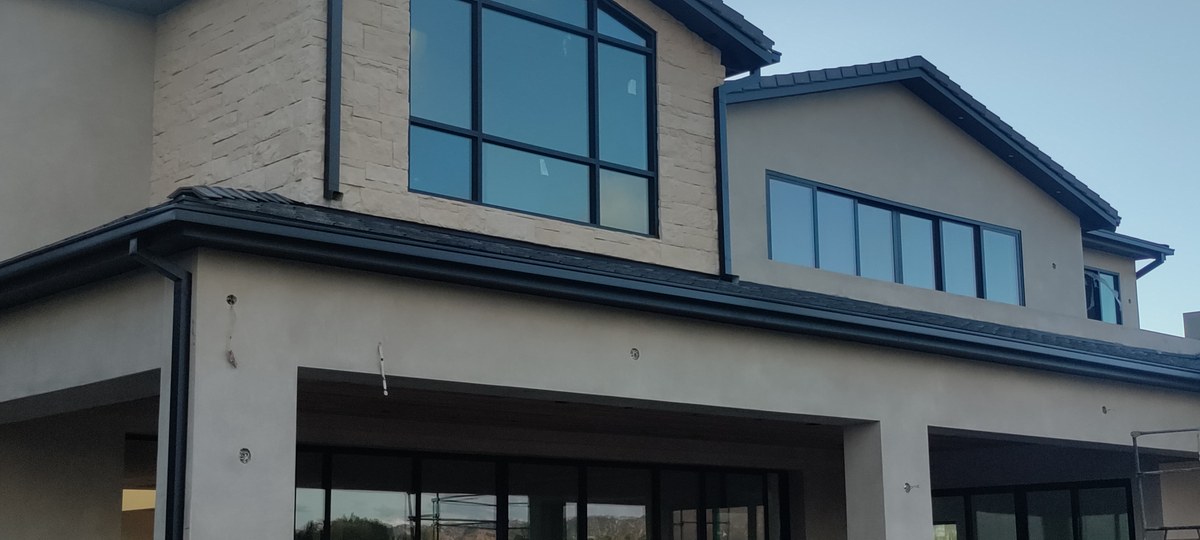
Standing seam means metal panels joined along raised seams, with the fasteners hidden underneath them.
The panels run down the slope and meet along ribs that stand above the panel surface. The fasteners sit under those ribs, so nothing goes through the exposed face of the metal.
That is what the phrase concealed fasteners describes on a finished roof. Ask any bidder where the fasteners sit, because the answer tells you which metal roof you are buying.
Twenty-four gauge describes the thickness of the metal in the panels we install. Gauge and seam profile are the two details worth writing down when you compare metal bids. Ask for both, so the quotes in your hand describe the same kind of roof.
We also work on metal roofs that another contractor put up years ago. Looking at the seams tells us which system is already on the building. That matters, because a repair has to match what is there rather than what we would install.
West Covina Roofing Contractor installs and repairs several roofing systems, and metal is one of them.
Checking the Roof You Already Have
Before panels come into it, we want to know what sits under your current covering.
Decking is the layer of structural boards that carries the covering above it. Finding it can change the scope of the quoted work, so it belongs in the conversation early.
A deck can already be carrying more than one covering. A tear-off means stripping all of it back to the deck, rather than going over the old covering.
How many layers are up there changes what a removal involves and what a new covering would sit on.
You can answer some of this from inside the building, without going near the roof. Tell us what you can see, and we will work from there.
- Where stains, drips or daylight show up when you look at the roof from inside
- How long the problem has been going on, and what the water has already reached
- Whether the roof has been repaired before, and which areas that earlier work covered
- Roughly how old the current covering is, and whether anyone knows what is under it
Where a Metal Roof Meets Everything Else
Edges, valleys and the places where a roof meets a wall all need their own metalwork.
Flashing is the metal that seals roof-to-wall joints, chimney sides and valleys on any roof. It is a leading origin of leaks, so it deserves attention before the open run of panels.
Two of those places are worth picturing: a chimney has to be sealed on all four of its sides. A valley takes the water off two slopes and carries it down one narrow line.
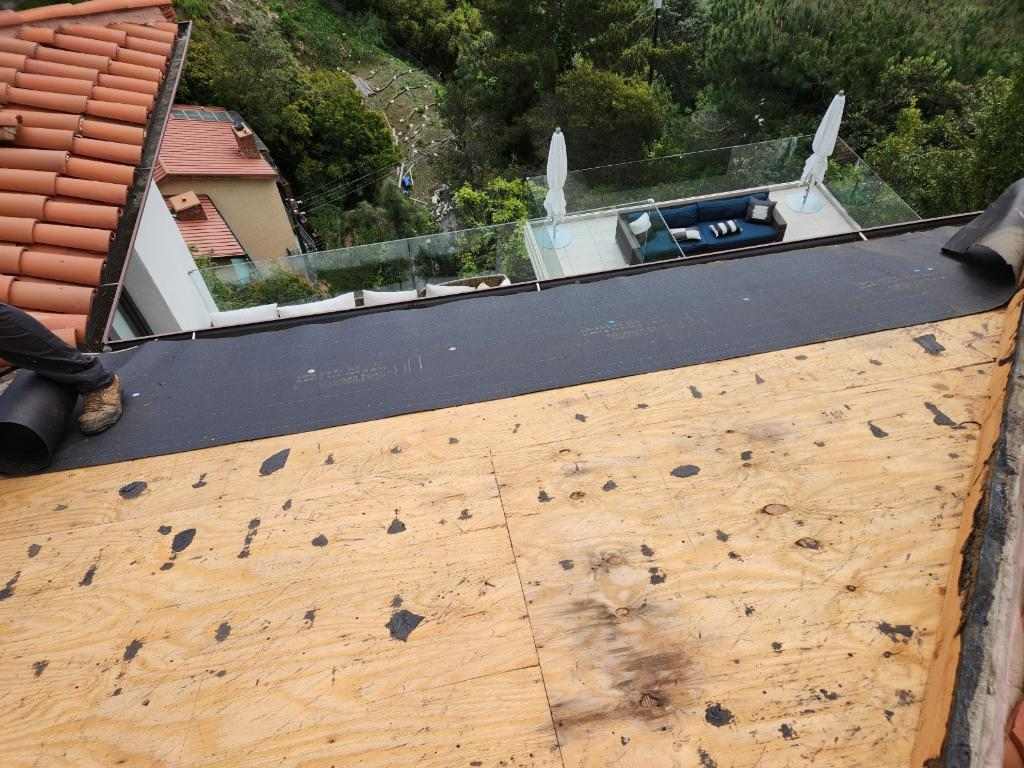
Metal can also meet another material on the same building. A metal porch or patio roof may run up into a tiled or shingled slope above it. That junction is worth looking at closely, because two systems have to be made to work together there.
If a metal roof on your property is leaking, the first job is finding where the water gets in. That is a roof repair question, and it is ordinary work for us. Small jobs are welcome, including leaks, loose flashing and patches on an existing covering.
Repairing Metal or Replacing the Roof
Both are real options, and the answer turns on how much of the roof has failed.
One failed flashing detail or a single damaged panel can be handled as a repair. Work at that scale is ordinary here, and a leak is worth a call whatever its size.
A full replacement is the better answer when the failures are spread across the roof. Widespread rot in the decking, several stacked coverings, and leaks in more than one area all point that way. None of them settles the question alone, so we look before saying either way.
Rotted decking has to come out before a new covering goes down over it. That holds for metal, tile and shingle alike, and it is not something anyone can judge from the ground.
An older roof with sound decking can still be worth repairing, and a newer one can already be failing. Age on its own does not settle the decision; the condition we find is what answers the question.
How a Metal Roofing Quote Is Built
Roofers measure and price roofs in squares, and a handful of physical facts set the total.
One roofing square is 100 square feet, and knowing the unit makes two quotes much easier to compare. Roof area is where the arithmetic starts, though it is never the only figure.
Pitch, the number of stories and the number of existing layers all move the total. So does rot under the covering, because damaged decking has to be replaced first.
Every one of those is a physical fact about your building, so ask any bidder which ones they counted. They are also the reason two roofs of the same size can price differently.
The sales estimate itself is free, whether the job is a repair or a replacement. A documented inspection report, the kind an escrow or an insurer asks for, is a separate paid service. Its fee moves with the size of the roof and the number of stories.
Getting to a Number on Your Roof
Some existing roofs can be quoted from satellite imagery, without a visit to the property.
Aerial imagery gives us the shape of the roof and a measurement of its area. That is enough for some roofs and not enough for others. Where an image cannot answer the question, a number taken from it would not mean much.
New construction works the other way round: when you or your builder supply plans, we quote from those plans. That route is open for metal and for the other systems we install.
Either way, an address and a short description of what the roof is doing give us somewhere to start. Call (626) 593-1910, or send us the details instead.
When Another Roofing System Fits Better
Sometimes the roof in front of us points somewhere other than metal.
Tile roofs have another option, because the underlayment beneath the tile can be replaced on its own.
We lift the tile off in sections, strip the old underlayment and repair rotted decking. New underlayment goes down, and the tile is restacked over it. Only tile that is still serviceable goes back up, because some breakage comes with lifting it.
Other projects land on asphalt shingles, and that is ordinary work for us as well. Slope, the state of the structure and the covering already in place all feed that choice. Whatever ends up on top, the decking underneath still has to be sound.
None of that rules metal out; it means the covering already on the building is part of the decision.
Telling Us Where the Roof Is
Send the exact property address, and the rest of the conversation gets easier.
Include the ZIP code along with the street address, since West Covina addresses include 91791 and 91792, among others. A ZIP code on its own does not prove a property sits inside the city, so the address decides.
A nearby landmark helps us place a property while you are still on the phone. The city's general plan describes The Mall and the Glendora Avenue neighborhood as connected downtown areas. Naming one of them tells us roughly which part of West Covina you mean.
If the property sits outside West Covina, say so rather than leaving us to guess. You can check the areas we cover before you pick up the phone. Property managers can send one address per building, which keeps the measurements clean.
What to Check Before Hiring a Metal Roofer
Check the license, ask how bad decking would be handled, and compare gauge and seam type.
Our license is CSLB #1112525, and you can confirm it through the state board's license lookup. The lookup returns the current status recorded against whichever number you enter.
A number printed on a website is worth checking against that public record, for any roofer you are considering.
West Covina Roofing Contractor is a division of Home Vision Remodel.
We work on houses, and the roofing work we do on homes runs wider than metal. Metal is one of several systems we install and repair, and the building decides which fits.
Ask for a free estimate, and call (626) 593-1910 whenever it suits you. Gauge, seam type and the plan for bad decking are the questions to put to every bidder.
Metal Roofing Questions
Can you install a metal roof over my existing roof?
It depends on what is already on the deck and the condition of the boards underneath. We look at the existing coverings first and tell you what we find up there. A tear-off back to the deck is the alternative when an overlay does not suit the roof.
Do you repair metal roofs, or only install new ones?
We install new metal roofs and we repair the ones already on buildings. Repair work covers leaks, flashing that has come loose and damage to an individual panel. We do not need to have installed a roof in order to work on it.
What happens if you find rot under the panels?
Rotted decking has to be replaced before a new covering goes down over it. Concealed rot is the kind of finding that changes the scope of the quoted work. It is worth agreeing in advance how any contractor will handle it if it turns up.
Do I need a permit for a metal roof?
Permit requirements come from the city or from whichever authority has jurisdiction over the property. Our team helps property owners pull the roofing permit that a project requires. Approval and timing are decided by that authority rather than by the roofer.
Do you work on commercial and multi-unit buildings?
Yes, we work on houses, on commercial buildings and on multi-unit properties, including property-managed sites. The deck, the condition of the decking and the edge details drive the work on any of them.